


Listen Live:
Saturday’s: 9AM
Fox Sports Ventura
1590 AM/97.9 FM KVTA
Sunday’s: 6:30AM
K-EARTH 101 FM
Listen Live:
Saturday’s: 9AM
Fox Sports Ventura
1590 AM/97.9 FM KVTA
Sunday’s: 6:30AM
K-EARTH 101 FM
Theresa McArthur of guidesforseniors.com
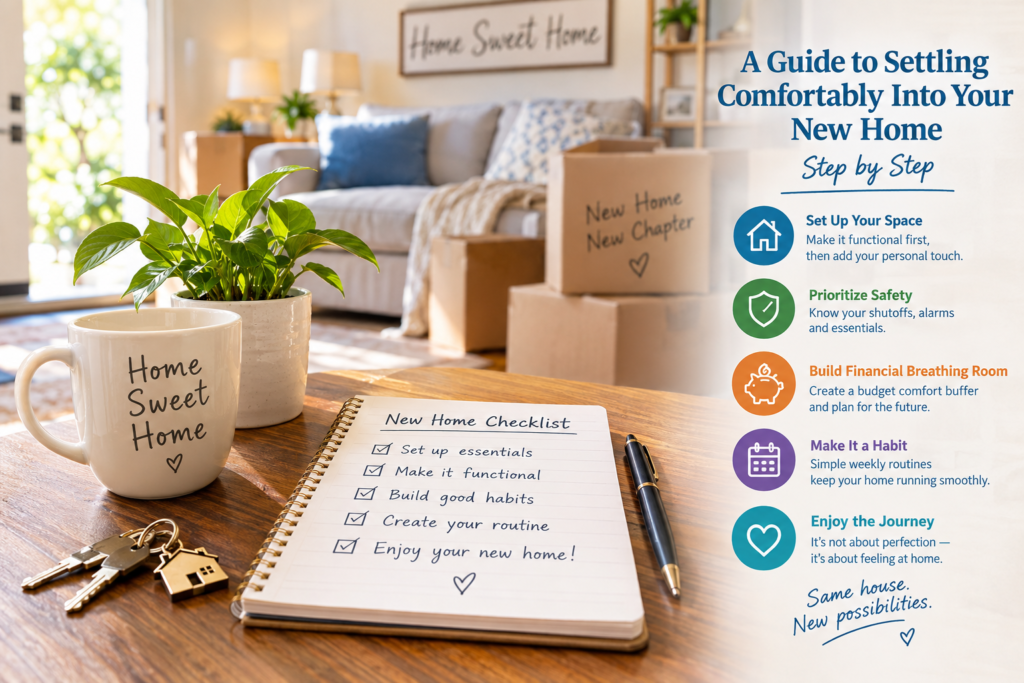
For new homeowners, the days after closing can feel surprisingly unsettled. Between the challenges of moving and the pressure to make everything feel “finished,” settling into a new home often turns into a mental checklist that never ends. That tension is normal during the homeownership transition, because a house is also a new set of routines, sounds, and decisions. With a calmer, step-by-step mindset, adjusting to a new environment becomes easier to manage and easier to enjoy.
A new home doesn’t need to be perfect to feel good, it needs to work for your daily life. Use one weekend to create a functional home environment first, then layer in comfort so you can settle in without the pressure to “finish” everything at once.
Once the boxes are unpacked and the basics are working, the next layer of comfort often comes from knowing you can handle the ongoing costs of homeownership. One way to create that breathing room is by strengthening your long-term earning potential, and earning a degree can be a practical step toward greater financial stability over time. An online degree in information technology, for example, can teach you the skills needed to become an IT expert, building knowledge you can carry forward as your career grows. Because it’s online, you can keep momentum without having to pause everything else: the flexibility lets you advance your education while balancing work, family, and the new responsibilities that come with a home. If you want an option designed for busy schedules, a flexible information technology bachelor’s program can make it easier to build new skills without putting your life on hold.
A few repeatable routines can turn an unfamiliar house into a place you understand and trust. When you practice them weekly, you catch issues early, reduce decision fatigue, and feel steadily more capable in your new space.
Q: What should I do in the first 24 hours for peace of mind?
A: Prioritize safety and access. Many moving checklists say to change the locks so you know exactly who can enter. Then locate your main shutoffs and breaker panel so you can respond calmly if something leaks or trips.
Q: How do I figure out what needs fixing first without getting overwhelmed?
A: Focus on what affects safety, water, and heat or cooling. It helps to pay attention to how you use your home, day-to-day and fix the friction points you hit repeatedly. Save cosmetic upgrades for later.
Q: When should I call a pro instead of troubleshooting myself?
A: Call right away for active water leaks, repeated electrical issues, gas odors, or a non-working HVAC in extreme temperatures. For smaller concerns, document what you see, take photos, and schedule service before it becomes urgent.
Q: Should I start a home maintenance log even if everything seems fine?
A: Yes, because it reduces guesswork later. Keep one note with appliance model numbers, warranty info, and dates for filter changes and inspections. A simple record also helps if you ever file an insurance claim.
Q: Can I rely on mail getting forwarded automatically after I move?
A: Plan for some gaps, because relying on new occupants to forward your mail is risky. Update your address with banks, insurers, employers, and subscriptions, and set aside time to catch stragglers.
A new home can feel like a mix of excitement and pressure, so many decisions, and a constant worry about what you might be missing. The path forward is a proactive home adjustment mindset: focus on a summary of settling tips that prioritizes safety, clarity, and small routines over perfection. With that approach, homeowner motivation grows naturally, and confidence in homeownership follows as your space starts working the way you live. Settle in by choosing a few small routines, then repeat them until the house feels familiar.

