


Listen Live:
Saturday’s: 9AM
Fox Sports Ventura
1590 AM/97.9 FM KVTA
Sunday’s: 6:30AM
K-EARTH 101 FM
Listen Live:
Saturday’s: 9AM
Fox Sports Ventura
1590 AM/97.9 FM KVTA
Sunday’s: 6:30AM
K-EARTH 101 FM
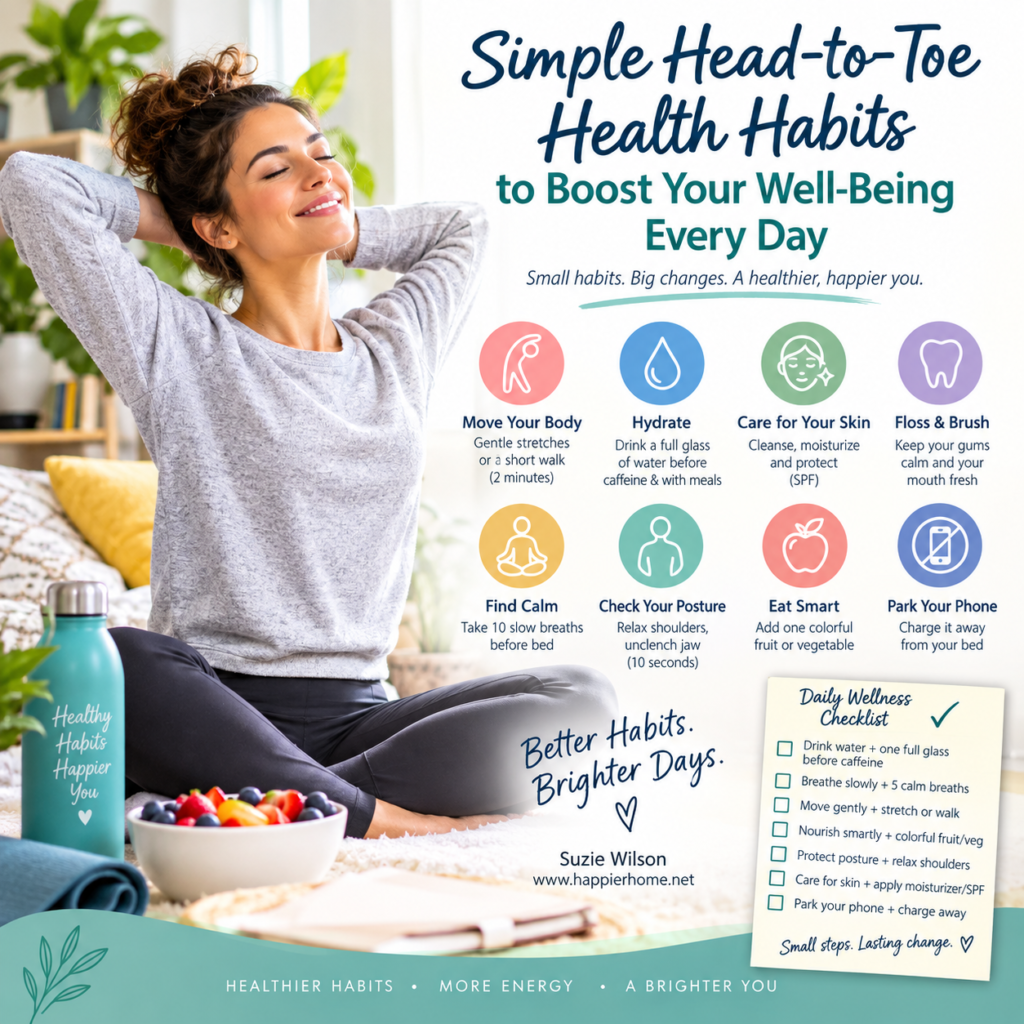
Suzie Wilson
www.happierhome.net
Busy parents, desk-bound professionals, and shift workers often push through everyday health challenges like nagging stiffness, low energy, and stress because there’s no time for a full life overhaul. The tension is real: daily physical health can feel like one more job, yet the body still keeps score in sore shoulders, restless nights, and foggy afternoons. Head-to-toe wellness strategies offer a calmer, more realistic way forward by turning care into a set of simple health habits that fit into normal routines. With small, consistent tweaks from head to toe, general well-being starts to feel steadier and more reliable.
Small habits work because they remove decision fatigue. When you repeat a few head-to-toe cues each day, your body starts to expect care, making energy, comfort, and mood easier to maintain over time.
Once your everyday habits are on autopilot, the next win is keeping your mind engaged in a way that supports a steadier mood and clearer focus. Lifelong learning is a simple mental well-being booster because it keeps your brain active, invites personal growth, and gives you fresh proof that you can improve, one skill, lesson, or idea at a time. That sense of progress can ease stress and build confidence, especially when life feels repetitive or overwhelming.
Earning an online degree can offer those same benefits, structure, momentum, and a stronger sense of capability, no matter what career track you’re on. And if healthcare leadership interests you, an accredited masters of healthcare administration can help you deepen your healthcare knowledge and develop expertise as a leader. If you miss days or struggle to fit learning in, the next section will help you stay consistent without feeling behind.
Q: How do I start a head-to-toe routine when I feel overwhelmed?
A: Start with one “anchor habit” you already do, like brushing your teeth, then attach a 30-second add-on. For example, after brushing, drink water or do 5 slow breaths. Keep it small enough that you can succeed on your worst day.
Q: What if I miss a few days and feel like I failed?
A: A missed day is data, not a verdict. Restart with the easiest version of your habit for two days to rebuild consistency, then increase gradually. Tracking “restarts” can be more motivating than tracking streaks.
Q: Can simple daily habits really make a difference if I do not have perfect healthcare access?
A: Yes, small self-care steps can support your daily functioning and confidence. The fact that 4.6 billion people worldwide are not covered by essential health services is one reason practical, at-home basics matter.
Q: How do I stop my phone from wrecking my sleep and focus?
A: Create a “phone parking spot” away from your bed and charge it there. If you need an extra guardrail, try to set screen time limits so scrolling does not quietly eat your evening routine.
Q: When should I change habits versus talk to a professional?
A: Start with gentle routines for stress, movement, hydration, and sleep. If you have severe pain, new symptoms, or mood changes that disrupt daily life, seek medical advice promptly.
This quick health routine checklist turns good intentions into daily wellness tracking you can actually follow. Screenshot it, print it, or run it in your head for an essential health habits summary that covers your whole body.
✔ Drink water + finish one full glass before caffeine
✔ Breathe slowly + take 5 calm breaths to reset stress
✔ Move gently + do 2 minutes of stretching or walking
✔ Nourish smartly + add one colorful fruit or vegetable
✔ Protect posture + relax shoulders and unclench jaw for 10 seconds
✔ Care for skin + apply moisturizer and SPF if you go outside
✔ Park your phone + charge it away from your bed
Check off one item now, then let momentum do the rest.
It’s easy to want better health and still feel too busy, tired, or overwhelmed to keep up with big changes. The real win comes from the small, head-to-toe mindset: tiny, repeatable choices that make sustaining health improvements feel doable, not draining. When those positive lifestyle changes become automatic, the checklist turns into a calmer baseline and more consistent energy day after day. Small habits done daily create the strongest kind of well-being.

