


Listen Live:
Saturday’s: 9AM
Fox Sports Ventura
1590 AM/97.9 FM KVTA
Sunday’s: 6:30AM
K-EARTH 101 FM
Listen Live:
Saturday’s: 9AM
Fox Sports Ventura
1590 AM/97.9 FM KVTA
Sunday’s: 6:30AM
K-EARTH 101 FM
Michael Harris / unitedforloans.com
I speak with Americans every day who believe homeownership is no longer realistic for them. High rates, rising prices, and discouraging headlines have caused many to quietly step away from the goal altogether. While that feeling is understandable, walking away from homeownership entirely can have long-term consequences that most people don’t see until years later.
For many households, the decision to stop pursuing homeownership delays more than just buying a home it delays life milestones. Marriage, children, relocation for better careers, and even retirement planning often get put on hold. What’s important to understand is that waiting for “perfect” conditions is rarely the winning strategy. Most homeowners didn’t buy at the bottom of the market or at the lowest rate they bought when they were informed, prepared, and had a plan.
From a financial standpoint, homeownership has historically been one of the most consistent ways American families build long-term wealth. Rent payments build no equity, and over time rising rents often outpace income growth. Homeownership, by contrast, allows households to lock in housing costs, benefit from appreciation, and build equity with each payment. Giving up on that path entirely can widen the wealth gap between renters and owners not because renters are making bad choices, but because they were never shown viable alternatives.
What many people don’t realize is that homeownership is not one-size-fits-all. You don’t need 20% down. You don’t need perfect credit. You don’t need to buy your “forever home” first. There are programs for first-time buyers, self-employed borrowers, veterans, rural buyers, and those using rental income or alternative documentation. In many cases, the barrier isn’t qualification it’s information.
The emotional toll is just as real. When people believe ownership is unattainable, they often disengage financially. Some take on more risk, others stop planning altogether, and many resign themselves to a future of uncertainty. As a lender, my role is not to push people into a loan it’s to help them understand what’s possible, even if that means creating a 12- or 24-month roadmap instead of buying today.
The American Dream hasn’t disappeared it has changed shape. Flexibility, education, and strategy matter more now than timing the market. The people who succeed are not those who wait for perfect conditions, but those who prepare early, ask better questions, and work with professionals who can explain options clearly and honestly.
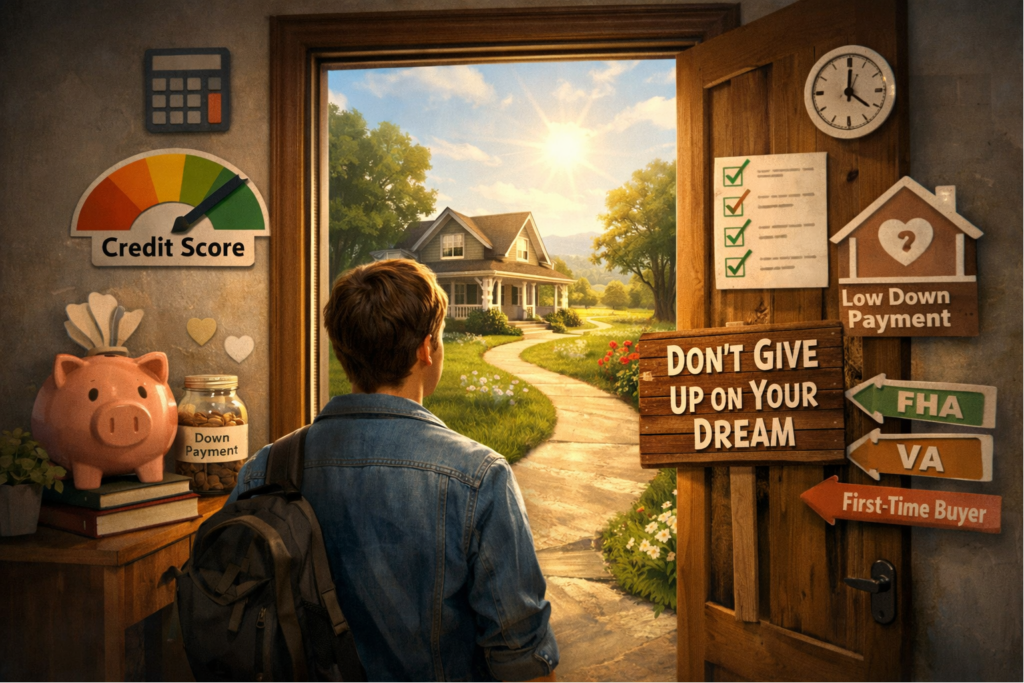
If you’ve given up on homeownership, my advice is simple: don’t close the door just pause and get informed. A conversation doesn’t obligate you to buy. But it can give you clarity, direction, and a plan and that alone puts you back in control of your future.

